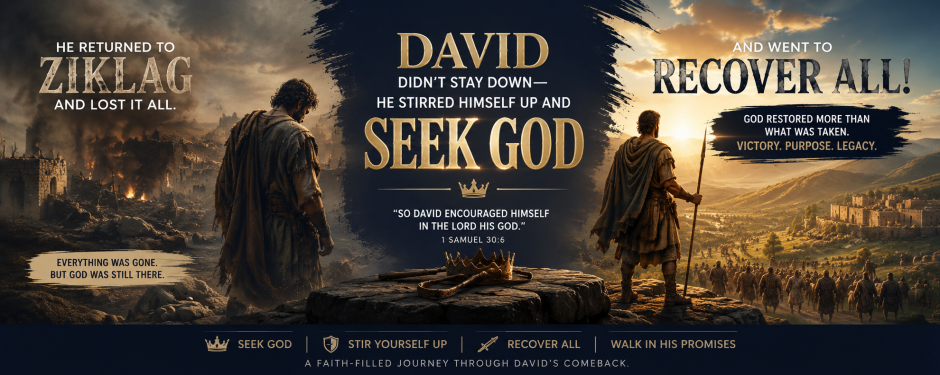
You’re sitting there, paralyzed.
Another opportunity passes. Another idea dies in your head. Another day closer to proving that voice right—the one that whispers you’re done.
Here’s what nobody tells you about losing everything:
The money isn’t the real loss.
It’s what happens to your nerve. Your courage. That part of you that used to believe you could rebuild.
That’s the bankruptcy that matters.
Because every day you let fear make your decisions, you’re not protecting yourself from failure. You’re guaranteeing it.
The Question Nobody’s Asking You
What if the abilities that created your first success—the instinct, the timing, the problem-solving skills—weren’t actually yours to begin with?
Most people don’t realize that every capacity we possess originates from something bigger than ourselves. The market insight that led to your first win. The relationship skills that opened doors. The creative solutions that generated income.
These weren’t just “your” talents. They were entrusted to you.
And here’s the part that changes everything: They’re still there.
The same Source that gave you the power to succeed the first time hasn’t revoked access. What’s changed isn’t your capability—it’s your willingness to steward it again.
From Ownership to Stewardship
There’s a fundamental shift that separates people who rebuild from people who stay broken:
They stop thinking like owners and start thinking like stewards.
When you believed you built everything yourself, losing it all meant losing your identity. But when you understand that you were always managing resources entrusted to you, failure becomes data—not destiny.
Consider this scenario: An entrepreneur loses everything in a market crash. Two paths emerge.
Path One: “I failed. I’m not cut out for this. I should play it safe.” Fear compounds daily. Opportunities are rejected. The dream dies slowly.
Path Two: “I was stewarding resources. Some strategies failed. The core abilities remain intact. What’s the next assignment?” Fear exists but doesn’t govern. Action builds momentum. Success becomes inevitable.
Same circumstances. Completely different operating systems.
The Mathematics of Courage
Here’s what experience teaches us about recovery:
Inaction doesn’t preserve your remaining confidence—it devours it. Every day you don’t move forward, the fear grows stronger and the dream grows smaller. The odds don’t improve with waiting. They deteriorate.
But every day you take action—even small action—the equation reverses. Fear shrinks. Confidence compounds. Momentum builds. What seemed impossible becomes inevitable.
This isn’t positive thinking. It’s proven principle.
The difference between temporary setback and permanent defeat isn’t in your bank account. It’s in your willingness to steward what remains: your skills, your knowledge, your capacity to solve problems and create value.
The Provision Principle
There’s an ancient pattern that still operates today: Faithfulness with little leads to responsibility over much.
When you shift from hoarding what’s left to stewarding what remains, something unlocks. Resources flow differently. Opportunities appear. Doors open that force alone couldn’t budge.
It’s not magic. It’s alignment with how provision actually works.
Business owners who grasp this principle stop being profit-maximizers and become kingdom-builders. They stop asking “How much can I extract?” and start asking “What am I being trusted to accomplish with these resources?”
The supernatural part? That shift in question creates supernatural results.
Your Next Move
You can’t afford to lose your nerve along with your money.
The capacities that created your first success are still intact. The difference between rebuilding and staying broken is whether you’re willing to steward them again.
Everything we’ve discussed—the shift from ownership to stewardship, the principle of faithful management unlocking greater provision, the mathematics of courage over fear—comes together in a fascinating framework I discovered recently.
It’s called Joseph’s Well, and it captures the essence of divine provision principles in practical, actionable format.
The approach mirrors what we’ve covered: understanding that provision flows to faithful stewards, that preparation precedes breakthrough, and that aligning with timeless principles activates resources that fear-based thinking blocks.
You’ll see exactly how to apply these stewardship insights to your specific situation—moving from paralysis to momentum, from scarcity thinking to abundance consciousness, from protecting yourself into poverty to risking yourself into provision.
Because here’s the truth that won’t leave you alone:
You’ll regret the chances you didn’t take far more than the ones you did.
The question isn’t whether you can rebuild.
The question is whether you’ll steward the capacity to do so.
Everything you need is still there. The only thing missing is your willingness to use it.
What’s it gonna be?
What would change if you actually had a plan?